If you’ve been pricing a shed, you’ve probably noticed two quotes for what looks like the same building can be thousands of dollars apart. Usually the reason is the frame. One quote is for a C-purlin shed and the other is for a structural steel shed. From the outside they can look identical. Inside, they are very different buildings.
Here’s a plain-English explanation of the difference, where each one makes sense, and what to ask before you sign.
First, the building blocks
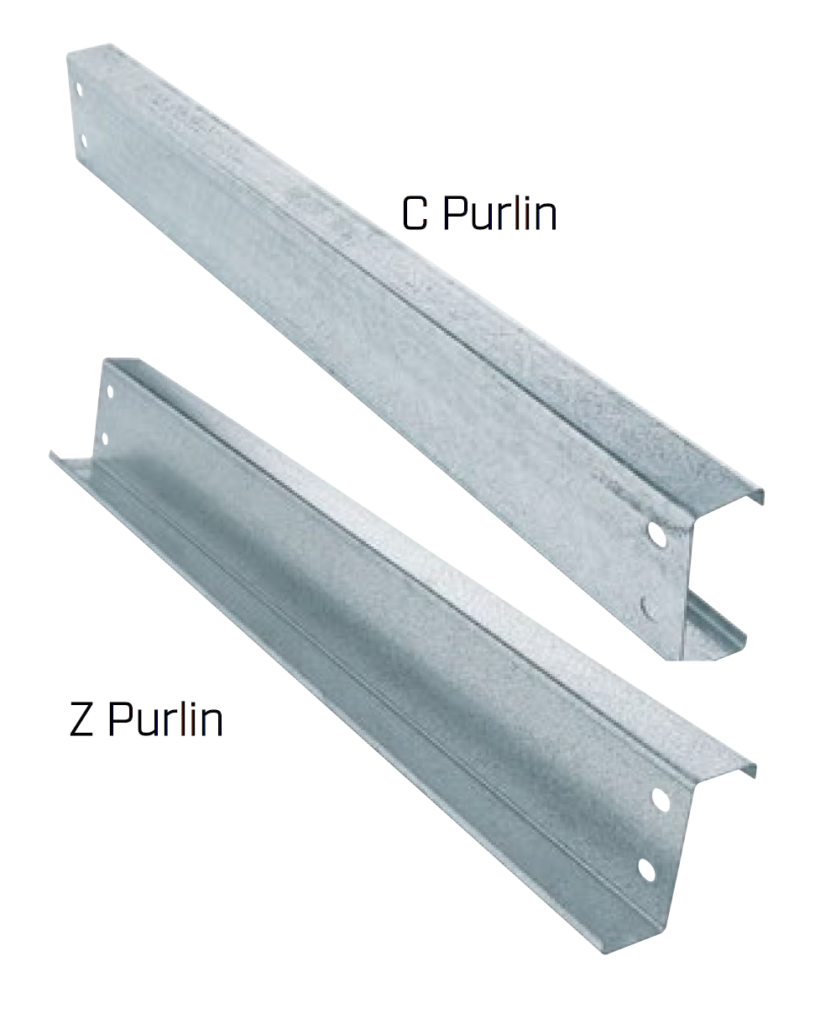
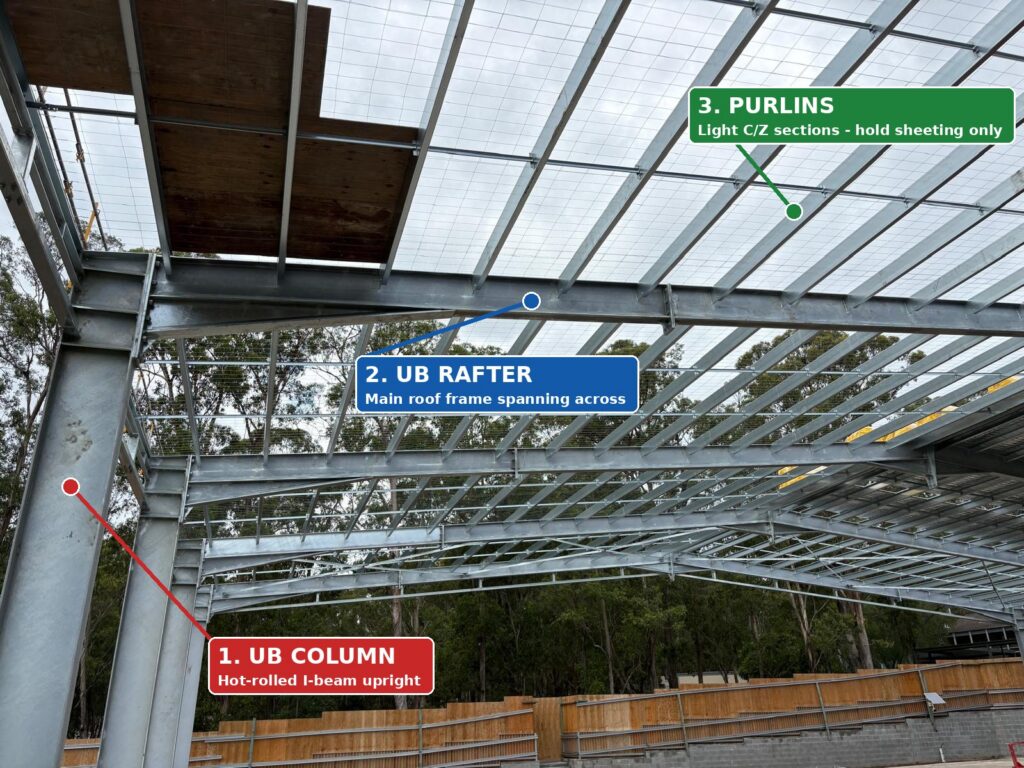
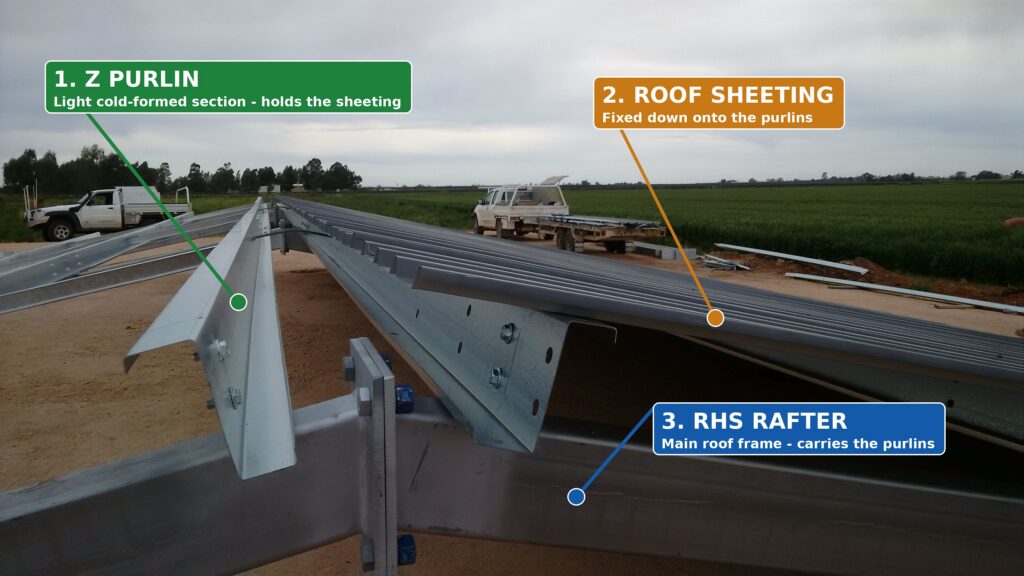
Purlins (C and Z sections) are light, cold-formed steel sections rolled from galvanised coil. In a structural shed, purlins run horizontally across the roof between the main frames, and girts do the same job on the walls. Their role is to hold the roof and wall sheeting in place and carry that load back to the main frame.
Universal Beams (UBs), also called I-beams, are hot-rolled structural steel sections. Their thick flanges and web make them far stiffer and stronger than a folded purlin of similar depth. In a structural shed, UBs form the main columns, meaning the uprights that hold the whole building up. They can also be used as rafters spanning across between the columns as well.
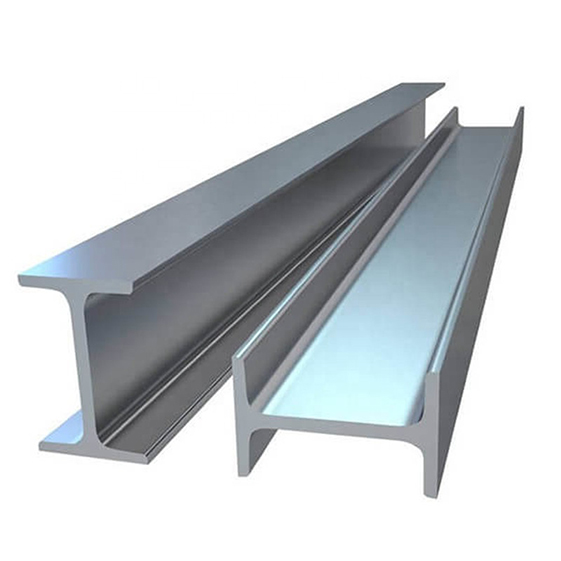
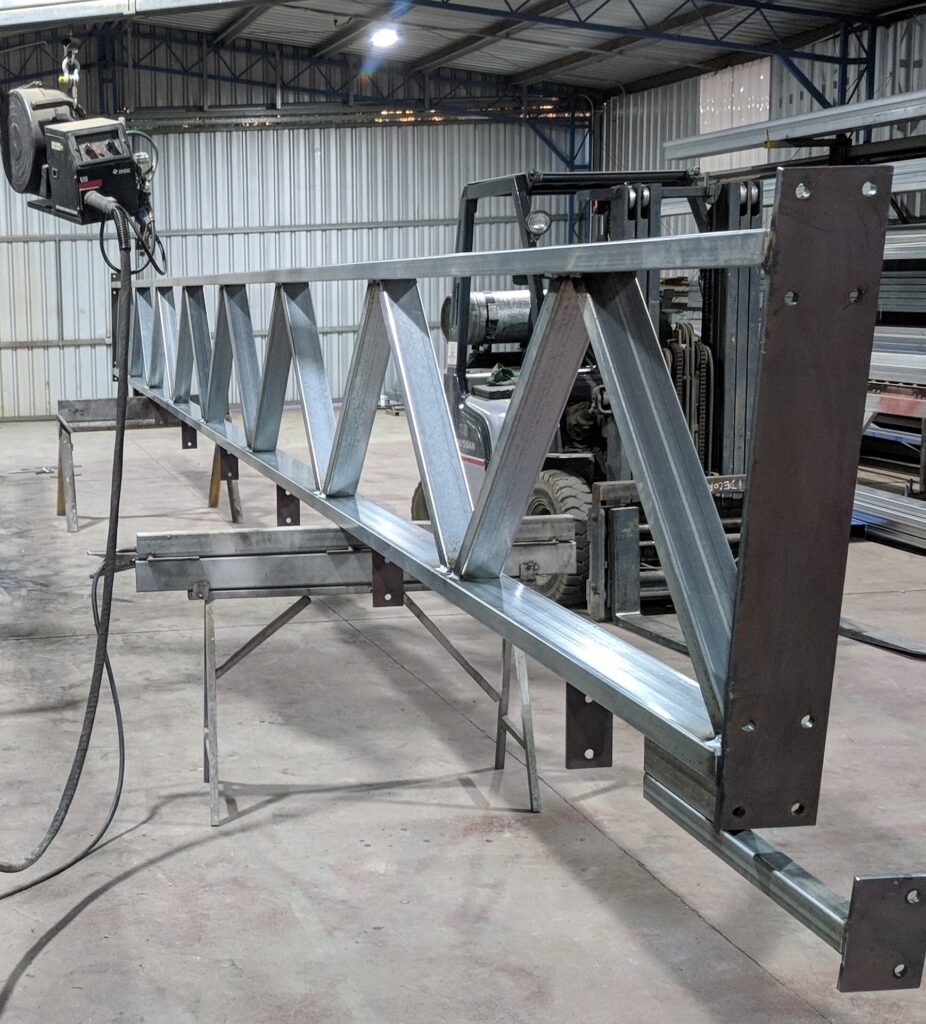
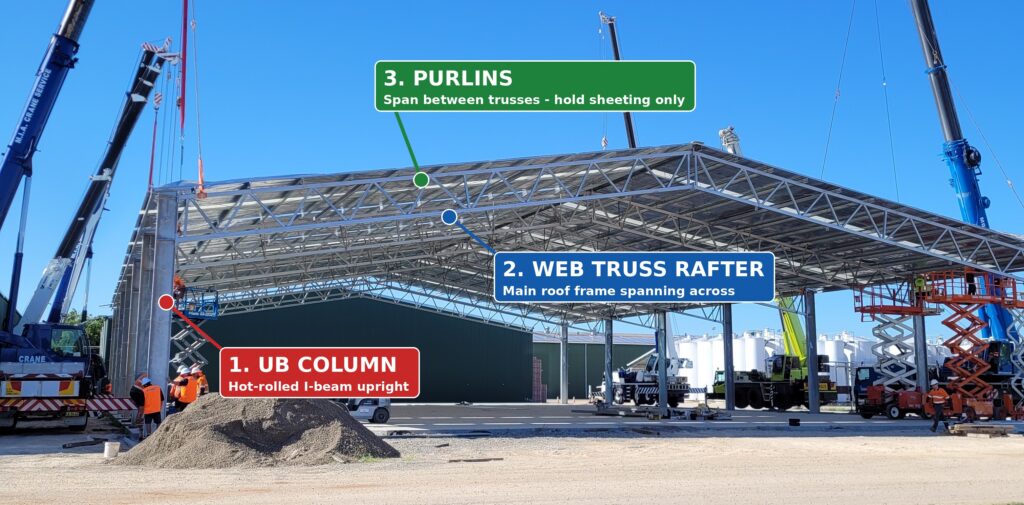
Web trusses span across the building on top of the columns. They’re built up from steel members in a triangulated pattern, which lets them cover wide clear spans with no internal posts. Some structural sheds use UB rafters or RHS frames instead of trusses.
Examples in real life:
- A UB upright + UB truss shed.
A UB Upright + Web Truss Rafters Shed
A shed with RHS (rectangular hollow section) and purlin framing; RHS is a structural member sometimes used in place of UB’s and Web Trusses.
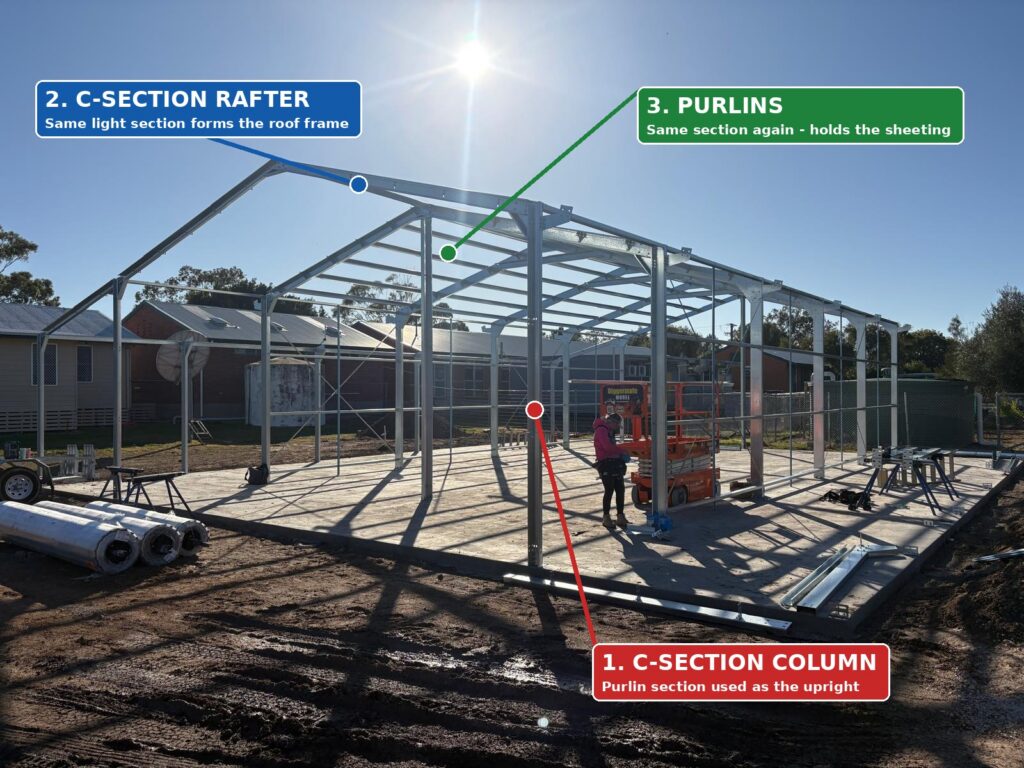
A C-purlin framed shed; the lightest version.
The key difference in one sentence
In a structural shed, C-purlins are the small members that support the sheeting between the main frames. In a C-purlin shed, those same light sections become the main columns and rafters that hold up the entire building.
That’s the whole story. A structural shed has a heavy primary frame of UB columns with UB rafters or web trusses, and purlins sit on top of it only to carry the cladding. A C-purlin shed has no heavy primary frame. The folded section that a structural shed uses for roof battens is doing every job: column, rafter, and brace. Often it’s doubled back-to-back to make up the strength.
It’s a bit like the difference between a house framed in hardwood posts and one where the ceiling battens have been stood on end to become the walls. Both can be engineered to stand up. They are not the same building.
Why C-purlin sheds are cheaper
C-purlin sheds are often 30–40% cheaper than a structural equivalent, up to a certain span. There are three reasons for that:
- Less steel and lighter steel. Cold-formed sections weigh a fraction of hot-rolled UBs.
- Faster fabrication. Components are roll-formed and punched to length, and bolted connections replace much of the welding.
- Lighter footings and easier handling. Smaller cranes, smaller crews, and quicker installation.
For a small farm shed, a garage, or basic dry storage, that saving can be the right call. A properly engineered C-purlin shed is a legitimate building.
Where structural steel earns its money
The savings shrink, and the risks grow, as buildings get bigger or work harder. Structural steel is usually the right choice when any of the following applies.
- Impact and abuse. This is the big one for commercial and farm users. A light-gauge C-section column that takes a hit from a forklift, tractor, or loader can buckle locally. Once a thin-walled section kinks, it loses much of its capacity, and repair means replacement. A UB column will usually shrug off the same knock, or at worst take a dent that can be assessed and repaired.
- Wide spans and tall walls. Purlin frames are efficient at smaller spans, but as width and height increase the sections need to be doubled up, braced, and knee-braced until the cost advantage disappears. Web trusses and UB portals deliver large clear spans with no internal posts to work around.
- Heavy wind regions and exposed sites. Structural frames give more headroom above the design loads.
- Future loads. You may want to add mezzanines, gantry cranes, solar arrays, hoists, insulation, or roof-mounted plant later. A structural frame can be designed for this, while a purlin frame generally can’t be retrofitted to carry it.
- Big openings. Wide roller doors and open bays need stiff frames either side, which is a natural fit for UB columns.
- Longevity and resale. Heavier sections tolerate corrosion, wear, and knocks over decades far better than thin-gauge steel. Buyers and valuers know the difference.
Quick comparison
C-Purlin Shed | Structural Steel Shed | |
|---|---|---|
Main columns | Cold-formed C-sections (often doubled) | Hot-rolled UB / I-beam |
Roof frame | C-section rafters | Web trusses or UB rafters |
Purlins’ role | They are the frame | Support sheeting only |
Typical cost | 30–40% cheaper at smaller spans | Higher upfront |
Impact resistance | Low – buckles if hit | High |
Clear span | Limited | Large |
Future add-ons (mezzanine, crane, solar) | Limited | Designed in |
Best for | Small farm sheds, garages, light storage | Warehouses, factories, workshops, machinery sheds, COLAs |
The questions to ask any shed supplier
- What are the columns made of, and what is the section size?
- Is the roof frame web trusses, UB rafters, or C-sections?
- What wind region and importance level is the shed engineered for?
- Can the frame carry a mezzanine, crane, or solar in future?
- What happens if a column is hit by machinery?
If two quotes don’t answer these the same way, you’re not comparing like with like.
How Asset Building approaches it
We design and construct commercial, industrial, and agricultural buildings across NSW, and we’ll tell you honestly which frame suits your use. If a C-purlin shed does the job, we’ll say so. If you’re running forklifts, storing machinery, or planning to grow, we’ll show you why structural steel is the cheaper building over its life.