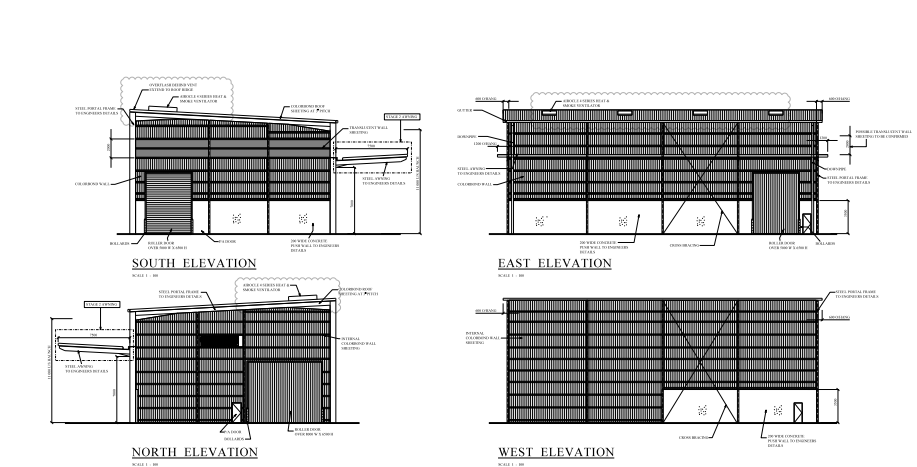
What Are You Looking to Build?
This is critically important – before design or approvals, you need to identify what you’re building in NCC terms (National Construction Code).
- Storage Shed → Class 7b
- Warehouse → Class 7b
- Factory / Workshop → Class 8
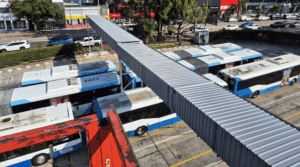
- Retro-fit Shed Awning (attached cover) → Class 10a (or Class 9b if used for assembly)
- Retro-fit Shed Extension → Matches existing class (7b or 8)
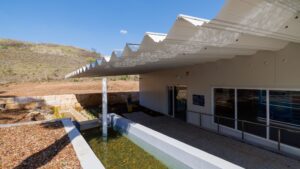
- COLA / School Covered Outdoor Learning Area → Class 9b (or Class 10a if purely shelter)
- Aircraft Hangar → Class 7b (sometimes Class 8 depending on use)
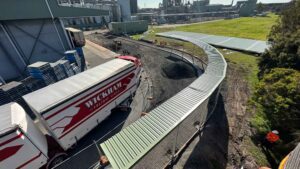
- Mining Shed / Industrial Facility → Class 7b or Class 8
If you’re unsure, you’re not alone. This is where most projects go wrong early, and where a “due diligence” assessment is recommended – Contact Asset Building Systems team for guidance on this.
The key principle is simple: classification is based on use, not appearance.
Why Building Classification Matters
For industrial sheds and commercial sheds, the building class drives everything that follows.
It determines:
- Whether you need a DA, CDC, or can pursue exempt development
- Fire resistance and egress requirements
- Structural design assumptions
- Compliance documentation and certification
If the classification is wrong, the design will be wrong. That leads to redesign, delays, and cost increases.
This is why shed design should never start before classification is clear.
The Core Classes for Industrial and Commercial Sheds
Most shed-type projects fall into one of four classes: 7b, 8, 9b, or 10a. Understanding the difference between them is critical.
Class 7b – Storage Sheds and Warehouses
This is the most common classification for industrial sheds.
It applies to:
- Storage sheds
- Warehouses
- Distribution centres
- Aircraft hangars (storage use)
- Mining storage buildings
The definition is straightforward: buildings used for storage or distribution of goods.
There is no processing, manufacturing, or alteration of goods inside the building.
If your building is used to:
- Store inventory
- Hold equipment
- Act as a logistics hub
…it is almost always Class 7b.
This is where most “industrial sheds” sit.
Class 8 – Factories and Workshops
Class 8 is where the activity changes.
It applies to:
- Factories
- Mechanical workshops
- Fabrication sheds
- Processing plants
- Mining operational buildings
The key difference from Class 7b is this:
Something is being done to the goods inside the building.
Examples include:
- Manufacturing
- Welding or fabrication
- Assembly
- Repairs
- Packing or processing
Even if the building looks identical to a warehouse, once you introduce active work, it becomes Class 8.
This shift has major implications for:
- Fire design
- Ventilation
- Compliance requirements
It’s one of the most common misclassifications in shed projects.
Class 9b – Assembly Buildings (COLAs and Public Structures)
This is where things start to get less straightforward.
Class 9b applies to buildings used for assembly of people, including:
- Schools
- Halls
- Sporting facilities
- Churches
For shed-style construction, this typically comes up with:
- COLAs (Covered Outdoor Learning Areas)
- Large open-sided structures used for gatherings
The complexity is that the same physical structure can fall into different classes depending on how it’s used.
For example:
- A roof-only structure used for student gatherings → Class 9b
- The same structure used purely as weather shelter → Class 10a
This is where planner and certifier interpretation becomes critical.
If people are gathering, being taught, or formally occupying the space, expect Class 9b.
Class 10a – Non-Habitable Sheds and Structures
Class 10a is the simplest category.
It applies to:
- Basic sheds
- Garages
- Carports
- Simple awnings
These are non-habitable structures and are typically:
- Ancillary to another building
- Not used for commercial or industrial activity
- Not occupied by large groups of people
This is where a lot of small or rural sheds sit.
However, there is a common mistake:
Just because it looks like a shed doesn’t make it Class 10a.
If it’s used for business operations, storage, or manufacturing, it will usually move into Class 7b or 8.
Special Cases That Catch People Out
Some project types sit on the boundary between classes and need careful assessment.
Retro-Fit Shed Awnings
Adding an awning to an existing shed is typically:
- Class 10a (non-habitable structure)
However, if that awning is used for:
- School activities
- Public gatherings
- Structured use
…it can shift into Class 9b.
This is a common issue with school projects.
Retro-Fit Shed Extensions
Extensions must follow the classification of the existing building.
- Warehouse extension → Class 7b
- Factory extension → Class 8
You cannot “downgrade” part of a building to a simpler class to avoid compliance.
The extension inherits the rules of the primary use.
Aircraft Hangars
Aircraft hangars are typically:
- Class 7b when used for storage
If the hangar includes:
- Mechanical work
- Maintenance
- Repairs
…it may shift toward Class 8.
This needs to be defined early in the brief.
Mining and Heavy Industrial Sheds
Mining projects often involve mixed-use buildings.
- Storage components → Class 7b
- Processing or operational areas → Class 8
In many cases, a single facility may contain both classifications, which complicates design and approvals.
Key Takeaways for Building Projects
1. Use Overrides Structure
The same shed design can fall into completely different classes:
- Storage shed → Class 7b
- Workshop → Class 8
- School COLA → Class 9b
- Farm shed → Class 10a
Do not rely on appearance. Always define the use first.
2. Grey Areas Create Risk
Be cautious with:
- Open-sided sheds
- Roof-only structures
- Multi-use buildings
These often depend on interpretation by:
- Planner (planning permissibility)
- Certifier (building compliance)
If you don’t lock this down early, it will surface later as a problem.
3. Classification Is Step 0
Before:
- Engaging engineers
- Pricing the job
- Committing to a client
You should:
- Clearly define the intended use
- Map it to an NCC class
- Confirm with a planner and/or certifier
This avoids rework and protects your budget.
What to Do Next
If you’re planning an industrial or commercial shed:
- Be explicit about how the building will be used
- Don’t assume classification based on past projects
- Get early input from a certifier if there is any ambiguity
For customised input on your project, and to ensure you’re getting a team on your side to help you through the approvals landscape, reach out to Asset Building Systems Australia today for your project – early involvement in a project is key to us helping to protect your budget & timeline!
*Disclaimer: This guide provides general information only and does not constitute professional advice. You should obtain project-specific advice from a qualified professional before proceeding.